LLR Books

Writing Advice from F. Scott Fitzgerald

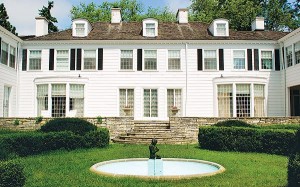
Piece of advice published on Letters of Note. It’s from F. Scott Fitzgerald to the aspiring writer at the time, Frances Turnbull, who sent him a story for comment while she was a student at Radcliffe. (The Turnbulls owned a summer house called La Paix, which Fitzgerald rented in 1932-1933 and where he wrote portions of “Tender Is the Night.”)
Fitzgerald’s advice here is wonderful, especially for new writers. He tells her “You’ve got to sell your heart, your strongest reactions, not the little minor things that only touch you lightly, the little experiences that you might tell at dinner.”
And
“…literature, even light literature, will accept nothing less from the neophyte. It is one of those professions that wants the ‘works.’ You wouldn’t be interested in a soldier who was only a little brave.”
Interestingly enough, in the post script, he tells Frances that she has talent, but tells her that is not enough. That reminded me of the post I wrote back in May, “Do You Have Talent?,” which makes the case that talent is just one thing a writer needs — but not the only thing.

Where Daisy Buchanan Lived


In a 1940 letter to his daughter written six months before his death, F. Scott Fitzgerald said, “Once I thought that Lake Forest was the most glamorous place in the world. Maybe it was.” Sixty-six years later, as I drove through the Illinois suburb that sits thirty-two miles north of the heart of Chicago’s Loop, I kept looking around and wondering to myself what exactly it was that Fitzgerald found so great. I thought about him as I drank a coffee at a Starbucks that wasn’t there the last time I’d visited, and I noticed that the McDonald’s drive-through near the Metra train station seemed to be buzzing. All the suburban trappings I recalled from a childhood spent on the North Shore of Chicago were still there. To me, Lake Forest was a place I’d gotten to know by peeking through frosted car windows on my way to early morning hockey practice as a kid. Cozy, definitely, but not exactly the sort of place I associate with the Roaring Twenties decadence and wild parties conjured by Fitzgerald’s name.

Founded in 1861, Lake Forest, Illinois, was originally built as a college town by Presbyterians. After the Civil War, the city attracted residents whose last names were synonymous with the building (and a decade later, the post–Great Fire rebuilding) of Chicago. Thanks to its tranquility and natural beauty, as well as its isolation from main roads, Lake Forest became the Chicago metropolitan area’s most desirable neighborhood, attracting Rockefellers, Armours, Medills, and Marshall Fields. Lake Forest was the Greenwich of the Midwest: a haven for robber barons and meat packers far from the strikes, riots, and muckrakers that threatened the wealth and safety of the early twentieth century’s 1 percent. By the city’s 150th anniversary, in 2011, Lake Forest had served as the setting for a best-selling novel (A Heartbreaking Work of Staggering Genius, by native son Dave Eggers) and Oscar-winning film (Robert Redford’s Ordinary People). But the city’s first true claim to literary fame came in 1925, as a passing mention in the first chapter of The Great Gatsby, in which we learn from narrator Nick Carraway that Tom Buchanan has bought a string of polo ponies from Lake Forest. Carraway is amazed that a man of his own generation is wealthy enough to have done so.

Fitzgerald’s repeated mentions of Lake Forest in his work is not much commented on; it isn’t associated with him the way Princeton University, Long Island, and the South of France tend to be. Indeed, the casual mention in Gatsby might lead one to believe that it was just a city he’d read about or a place he saw on a map. But it’s something more than that. The reason Lake Forest became such a significant place to one of America’s great writers is simple: his first love was from there.

Ginevra King met Scott Fitzgerald for the first time on January 4, 1915, while visiting a school friend in Minnesota. The two began a romance that consisted primarily of written correspondence, until it was broken off in 1917. While a two-year letter writing campaign might not seem like much by today’s standards, it clearly made an impression. Several of Fitzgerald’s best-known female characters were based on a composite partially inspired by King and her letters: from Judy Jones in the short story “Winter Dreams” to Isabelle Borge in This Side of Paradise. The poor boy losing the rich girl is a common theme in Fitzgerald’s work, and the original model was surely his relationship with King. King’s influence is also present in the iconic character of Daisy Buchanan—Jay Gatsby’s obsession and one of Fitzgerald’s most memorable creations.
King
In the years leading up to World War I, King and her three closest friends—Margaret Carry, Courtney Letts, and Edith Cummings—were considered celebrities in Lake Forest and, indeed, throughout the Chicagoland area. Collectively known as the Big Four (a name they bestowed on themselves), they were the socialites of their era. The exclusive group didn’t allow new members, and each wore a rose-gold pinkie ring with The Big Four 1914 engraved on the inner band. They rarely went out in public without each other, were either loved or reviled by everyone who knew about them, and, with the brashness of the young and rich, didn’t care about what anybody thought. As if Gatsby’s one tie to Lake Forest wasn’t enough, Cummings, who in 1924 became the first golfer and female athlete featured on the cover of Time, is a reasonable culprit for the inspiration behind the sassy and dishonest golfer, Jordan Baker
As with any truly great book, everybody who loves Gatsby comes away with certain ideas of what the novel is really about. You can’t help but attach meaning to parts of the book in an attempt to understand things: Was Gatsby a Jew? What’s the deal with the green light? Is it a book about the American Dream or is it mocking the very concept? Gatsby is the type of classic that deserves to have conclusions drawn about it by scholars and casual readers alike. And as soon as I learned about Fitzgerald’s Lake Forest past, I was reading a book about him and Ginevra King. Fitzgerald wrote the chunk of the book that takes place on Long Island while living on Long Island with Zelda by his side, but it seemed to me that The Great Gatsby could have just as easily have been set in Lake Forest.
According to King’s diaries and letters to Fitzgerald (which are available to the public at Princeton University), the young writer first visited her in Lake Forest late in June 1915. The trip was brief, but Fitzgerald surely admired the beauty of the affluent city. He wouldn’t have missed Edith Rockefeller McCormick’s Villa Turicum—the lakefront estate (situated on three hundred acres) designed by Charles Platt and inspired by Edith Wharton’s Italian Villas and Their Gardens—and surely visited the public lawns manicured to resemble English gardens that he would later recall, in another “Ginevra story,” “A Nice Quiet Place,” as “immaculate.” He returned again the following summer. This time he had a bit more time to see Lake Forest and observe the culture. Since Fitzgerald’s own hometown in Minnesota mostly comprised the nouveau riche, his time spent in Lake Forest was perhaps his first exposure (not counting rowdy days at Princeton) to old money’s natural habitat. If that is indeed the case, the city that stretches out along Lake Michigan shaped the writer’s view of how the other half lived, and any fan of Fitzgerald knows that the lifestyles of the rich (both old and new) were fixations in his work. And it could be mere coincidence, but Lake Forest is part of the group of Chicagoland lakefront cities known as the North Shore; Gatsby’s West and East Egg, based off the Long Island cities of Great Neck and Sands Point, are also on a part of the island referred to as the North Shore.

Villa Turicum
There are some that believe King and Lake Forest may have even helped Fitzgerald come up with the initial idea for Gatsby. In his 2005 book, The Perfect Hour, which attempts to piece together King’s relationship with Fitzgerald, James L. M. West III points to a story that she wrote and shared with Fitzgerald in 1916. West suggests that Fitzgerald may have used the untitled piece “in search of material and inspiration,” pointing out a handful of similarities between King’s somewhat crude short story and Fitzgerald’s masterpiece. West also points out that the story makes clear that King was aware of Fitzgerald’s habit of observing her and her friends; one of her characters, a writer named “Scott Fitz-Gerald” keeps a card file on his old girlfriends. Indeed, Fitzgerald’s writing process sometimes involved him scouring old letters and journals in order to jog his memory or kick-start his creative drive. One batch of documents may have included a 227-page binder filled with transcripts of King’s letters, which she had asked him to destroy in a letter on July 7, 1917. The first page of the batch reads, “Strictly Private Letters: Property of F. Scott Fitzgerald (Not Manuscript).”

Kingdom Come Farm, today.
I visited Lake Forest again last year and thought more about Fitzgerald and King. I grabbed a coffee at the Starbucks that didn’t seem so new anymore, I ate lunch at a restaurant with three different autographed Vince Vaughn photos (another favorite son of the city), and I reread Gatsby before crashing on a friend’s couch in nearby Evanston. I tried to picture this writer, of whom I’ve only seen about a dozen photographs, sitting at his desk thinking of Lake Forest and the girl he once knew from there. The next day I got into a car and took the only thing resembling a literary pilgrimage I’ve ever taken in my life, as I drove through the city trying to experience what Fitzgerald had experienced. I looked out over the bluffs that faced Lake Michigan, trying to imagine a fabulous West Egg party taking place there. I tried to picture Meyer Wolfsheim making a stop in Lake Forest after he met with Chicago associates, and I envisioned Jordan Baker teeing up as I passed by the Onwentsia Club where King and her three friends were regulars. And when I caught a glimpse of the property once known as Kingdom Come Farms that was owned by King’s father, and, no doubt, hosted Fitzgerald at least once, I tried to imagine Gatsby pulling up in a yellow Rolls Royce, hoping to impress the girl who changed his life when he was a much younger man.

F. Scott Fitzgerald at the Cavalier Hotel -1927


For years, the photo below has circulated among F. Scott Fitzgerald, (author of the Great Gatsby) fans leaving them without any type of descriptive information concerning this wonderful family portrait.


Today, we are happy to finally give this photo the proper credits and to provide fans of the Fitzgerald’s with some additional information.
The photo was taken by the Tidewater photo service in Virginia Beach at the Cavalier Hotel swimming pool in July of 1927 and first published in the Norfolk Ledger Dispatch on July 18, 1927.
Here is a close-up of the photo as it ran in the newspaper 85 years ago yesterday afternoon –
The Tidewater photo service was based at 207 Granby St. in Norfolk, Va. and had a branch office at 205 17th St. in Virginia Beach. Their motto was “Portraits that Please”.


Here are telegrams sent to and from F. Scott Fitzgerald while he, Zelda and Scottie Fitzgerald were visiting Hampton Roads. They are dated between the 14th of July and the 21st of July.
Some were sent to and from the Cavalier Hotel and another to a wire office in Norfolk. It is possible that F. Scott and his family were visiting one of his favorite cousins in Norfolk- ''Cousin Cecie'' (Mrs. Richard Calvert Taylor) who lived on the corner of Gosnold and Carolina streets in Norfolk’s Colonial Place.


The Fitzgerald’s returned to America from France in December of 1926 with F. Scott spending some time in Hollywood beginning in January of 1927. They began renting their mansion “Ellerslie,” near Wilmington, Delaware in March of 1927 – so a quick vacation down to the Cavalier in July would be quite convenient.
The Cavalier Hotel had its grand opening in April of 1927 – so the Fitzgerald’s were some of the first celebrities to stay at this grand hotel on the Atlantic.


Zelda


“I don’t suppose I really know you very well – but I know you smell like the delicious damp grass that grows near old walls and that your hands are beautiful opening out of your sleeves and that the back of your head is a mossy sheltered cave when there is trouble in the wind and that my cheek just fits the depression in your shoulder.” Zelda

Zelda


Genius, gin and Gatsby


They looked, wrote Dorothy Parker, "as though they had just stepped out of the sun". The gifted writer F Scott Fitzgerald and his beautiful wife Zelda were icons of the Jazz Age who partied with abandon but gradually furious rows, fuelled by alcohol and sexual jealousy, became common, and both of them would die young. Emily Hourican recalls their doomed lives and, in the light of new stage and film versions of 'The Great Gatsby', writer Jay McInerney reflects on what the tale reveals about the American psyche

F Scott Fitzgerald may indeed have had "talent ... as natural as the pattern that was made by the dust of a butterfly's wings", as Hemingway put it, but without the influence of his wife Zelda, whose capacity for romantic recklessness matched his own, that talent would not have found the exquisite form that made him one of the great modern novelists.

Zelda was the model for nearly all of Fitzgerald's complex, ultimately unknowable heroines, from Rosalind in This Side of Paradise, to Daisy in The Great Gatsby and Nicole Driver in Tender is the Night; those girls with luminous eyes and delicate grace, capable of being inexplicably moved to tears by the cut of a dinner jacket or the curve of a man's cheek.

Zelda Sayre was the youngest of six children, born to a prominent Southern family, and grew up spoiled and rich in a pre-war America that was the peak of civilised refinement; an era of cool drinks on shady porches, of dances, dalliances and seemingly inexhaustible wealth, when youth was a golden, indulged time.

And Zelda was, in Fitzgerald's eyes, a golden girl. Precocious and attention-seeking, she was also beautiful. Photographs show an almost childish face, with large, far-apart eyes and a small, full mouth. But she also looks brooding, even sullen, almost never pictured smiling. From a young age, she was smoking, drinking and hanging around with boys -- along with Tallulah Bankhead, a childhood friend. Her various scandalous escapades included dancing the Charleston and wearing a flesh-coloured swimsuit; Alabama society described her as an "enchantress" and a "disgrace", often almost in the same breath. Fitzgerald, then a 21-year-old army recruit from a well-established though far from wealthy Irish Catholic Minnesota family, took one look at her during a country club dance and was besotted; "I love her, and that's the beginning and the end of it," he said.

At the time, he was a Princeton-educated struggling artist, working on his book This Side of Paradise ("all criticism of Rosalind ends in her beauty", he wrote of the character inspired by Zelda). He certainly wasn't rich or established enough for Zelda, who had various other suitors, but something in his ambition, romanticism and, particularly, his belief that life should be lived freely, as a work of art, appealed to her. Nevertheless, she broke off the engagement at one point, and flirted seriously with other men, which incensed Fitzgerald."I wouldn't care if she died, but I couldn't stand to have anyone else marry her," he told a friend. His book was published, and became an instant success. Fitzgerald and Zelda married, and became the golden couple of 1920s New York.

Poet and satirist Dorothy Parker described them as looking "as though they had just stepped out of the sun". They drank and partied with abandon, true to the tenets of their faith in life -- daring, dashing and reckless. She received friends in her bath, together they splashed fully clothed in the fountain at Union Square, got banned from hotels, rode on top of taxis and passed out, drunk, in each other's arms at parties.

But gradually the dream of glamour turned increasingly sordid. Furious rows, fuelled by alcohol and sexual jealousy, became common. Zelda had a daughter, Frances, known as Scottie, just over a year into the marriage, remarking at her birth, "I hope it's beautiful and a fool -- a beautiful little fool"; words that anyone who knows The Great Gatsby will immediately recognise as said by Daisy.

There were to be no more children, a second pregnancy ended in probable abortion, and Zelda was far from domesticated. She had a nanny for Scottie, two housekeepers and a laundress for her fabulous clothes. Asked by Harper & Brothers to contribute something to Favorite Recipes of Famous Women, she wrote: "See if there is any bacon, and if there is, ask the cook which pan to fry it in. Then ask if there are any eggs, and if so try and persuade the cook to poach two of them. It is better not to attempt toast, as it burns very easily..."

In an attempt to live more cheaply, the Fitzgeralds moved to France, and divided their time between Paris and Antibes, where they hung out with Picasso, Cole Porter, Gertrude Stein, and Hemingway. Zelda had an intense affair with a French aviator, Edouard Jozan, and demanded a divorce. Fitzgerald responded by locking her in the house until she changed her mind. He continued writing, often lifting passages wholesale from Zelda's letters and diaries, as well as copying her turns of phrase -- "Mr Fitzgerald ... seems to believe that plagiarism begins at home," she once wrote in a cheeky review of The Beautiful and the Damned for the New York Tribune, but pretty quickly the plagarism became a source of bitterness between them, especially as Zelda more and more wanted to stop playing the passive role of muse, and write herself.

While visiting Gerald and Sara Murphy, who lived at the Hotel du Cap, Zelda swallowed a large, but not fatal, dose of sleeping pills. Both she and Scott denied it was a suicide attempt, but their antics were increasingly dangerous -- such as coming home from parties drunk, then diving in darkness from 35ft rocks into the sea. When Sara Murphy remonstrated with her, Zelda responded with, "Didn't you know? We're not into conservation." Later, at a clifftop restaurant, Zelda threw herself down a flight of stairs because Fitzgerald was kneeling at the feet of Isadora Duncan and ignoring Zelda.

Still desperate to find her own creative outlet, Zelda became obsessed with ballet, which she had been good at as a child. She began practising eight hours a day, becoming anorexic and exhausted; "All I do is dance and sweat ... I look like hell, feel like hell, and act like hell," she told a friend. She also became obsessed with the notion that Fitzgerald was having an affair with Hemingway -- homosexual crushes were a feature of both their lives, though there is little suggestion that anything came of these.

Worn out, she was admitted to a sanitorium and diagnosed as schizophrenic. It was to be the beginning of a pattern of breakdown and short-lived rehabilitation that dogged her for the rest of her life.

She did finally write a novel, Save Me The Waltz, which told the story of the couple's disintegrating marriage from her perspective and incensed Fitzgerald, although he had been rather cynically using her thoughts and speech-patterns for years.

Save Me The Waltz sank almost without trace on publication and her attempts at a second novel were thwarted when Fitzgerald ordered her to stop writing, to simply swim and paint. Then he published Tender is the Night, with its devastating portrait of mental illness, and left Zelda reeling at the betrayal.

She had another, more serious, breakdown, and was hospitalised again, this time hearing voices. From then on, any periods outside hospital were limited. Scottie was sent to boarding school and parcelled out among various relatives, something she doesn't seem to have resented, saying once, "I don't consider I had a very difficult childhood at all. In fact, I consider it a rather wonderful childhood." She grew up to write for the Washington Post and the New Yorker, as well as writing comedies about the Washington social scene.

Scott moved to Hollywood, where he began an affair with celebrity columnist Sheilah Graham, although he and Zelda continued to correspond to the end. His most moving epitaph on the relationship was, "We destroyed ourselves. But in all honesty, I never thought we destroyed each other".

In Hollywood, he tried writing for movies, work that he found degrading and tolerated only for the money he increasingly needed. Bullied by studio producers, unfit for the work in hand, and believing himself a literary failure, Fitzgerald died of a heart attack at 44. Eight years later, Zelda died in a fire at the hospital in which she was residing -- locked into her room, awaiting electric shock treatment.

It was a horrific end for the girl who once had the young men of two army camps fighting for her attention, flying stunts over her house until banned by a commanding officer and executing drills in her honour. The year before Fitzgerald died, she wrote to him: "I am always loyal to the concepts that held us together so long ... Nothing could have survived our life." Probably she was right.

"Sometimes I don't know whether Zelda and I are real or are characters in one of my novels," Fitzgerald once said. Both, is the answer, and it is because of the fluid line between the two that his novels are so moving, filled with a romantic aspiration as irresistible as charm itself. The innocence and loss of innocence that runs through all his best work was mirrored in the desperately yearning, ultimately doomed, lives he and Zelda led.

EH

Incredible photographs reveal the $30 million 'Great Gatsby' mansion in all its former glory


Photographs of the colonial mansion, said to be the inspiration of F. Scott Fitzgerald's literary classic The Great Gatsby, clearly show the estate’s former grandeur.


In the Roaring twenties the lavish home on the North Shore of Long Island was the go-to party house for the likes of Fitzgerald, Winston Churchill and the Marx Brothers.

Lands End came to a sad end last month when it was demolished after the owners could no longer afford the $4,500 a day upkeep of the home.

 Lands End, the Long Island estate rumored to have inspired F. Scott Fitzgerald's vision of Daisy Buchanan's house in The Great Gatsby, is pictured in a brochure in the '70s or early '80s

The estate was knocked down last month after the owners, who brought the home in 2004, could no longer afford the property's $4,500 a day upkeep

Lands End, on the North Shore of Long Island, boasted 23 rooms, a private beach and numerous spacious sitting rooms - including this one with impressive sea views

The estate, which sprawled over 13 acres, was valued at $30 million when it was torn down.

These incredible photos, from an old listing brochure posted on Old Long Island blog, were taken in the ‘70s or early ‘80s, before the mansion was brought in 1983.

From steel beams to American icon: Golden Gate Bridge celebrates 75 years as an engineering masterpiece

The brochure lists the house for $2.5 million - a sum that includes 'all furniture, drapes, linens, complete service of English threat silver and Baccarat crystal for 48, furnishings in all bldgs.'

As well as 10 bedrooms, the brochure details the property as having nine and a half bathrooms, six servant rooms, multiple sitting rooms, a 7-car garage and a sauna.

 Illustrious: These pictures were taken when the estate was on the market for $2.5 million in the late '70s - in 1983 the property was snapped up by former Mets owner Charles Shipman Payson

The brochure adds that the property price of $2.5 million includes 'all furniture, drapes, linens, complete service of English threat silver and Baccarat crystal for 48, furnishings in all bldgs'

The house was the scene of lavish parties attended by the likes of the Marx brothers and Winston Churchill. Guests danced on the rounded cabana overlooking the 75ft pool

Fitzgerald is said to have based Daisy Buchanan’s home in his 1925 masterpiece on the extravagant mansion.

Built in 1902, the New York World newspaper executive editor Herbert Bayard Swope brought the property, which was originally called Keewaydin, in 1929.

He used to throw extravagant parties for guests including the Duke and Duchess of Windsor, Dorothy Parker, Groucho Marx and Albert Einstein.

 After moving to the island with his wife, Zelda, in 1922, Fitzgerald watched the grand parties from his veranda in Great Neck across the bay imagining what went on there.

Guests danced on the roof of a rounded cabana by the 75ft swimming pool, and would have stayed in one of the six family-sized bedrooms while the Swopes lived in the three-room master suite.

Similarly, in the classic novel, Daisy Buchanan's house has a green light at the end of the dock which Gatsby gazes at every night from his mansion.

The 24,000 sq. ft. mansion had 25 rooms, which in its heyday had Palladian windows, marble floors and hand-painted wallpaper.

 Once upon a time: The library boasted two fireplaces and a wet bar, according to the brochure

As well as views across Long Island sound, it had its own tennis court, two private sandy beaches and a 75 ft swimming pool. There was even a bird sanctuary next door.

The home was one of the few remaining relics harking back to Fitzgerald's time. It was built on a strip of land known as the Gold Coast where wealthy New Yorkers built estates.

In 1983 Mets owner Charles Shipman Payson brought the estate, christening it Lands End.

 Adaptation: A film adaptation of The Great Gatsby is being released later this year with Carey Mulligan taking on the role of Daisy Buchanan

The property’s last owner developer Burt Brodsky, purchased the illustrious home from Virginia Kraft Payson, the late wife of Charles Shipman Payson.

He planned to renovate it and turn it into a family home, but it proved too costly with the maintenance costing $4,500 a day.

In 2006, he estimated it would cost around $2 million to make it livable.

Now there are plans to build five custom built homes worth $10 million each on the property in a community called Seagate in the village of Sands Point.